TL;DR: We compared five counterfeit nicotine pouch products sourced from one of China’s “best” fake-making factories against the real deal. The biggest giveaways were pouch shape (easy fix), uneven filling, harsher nicotine experience and aroma. The material and flavor were surprisingly close in some samples. Our main takeaway: a pouch tasting familiar does not prove it is genuine—or verify what’s inside it.
And when it comes to a factory making fakes, it’s hard not to assume their moral compass knows no end when reducing their bottom line via lower quality ingredients.
Results: The imitation pouch material scored 90% similar, flavor scored 74%, and even the perceived nicotine experience scored 70% when compared to the real stuff.
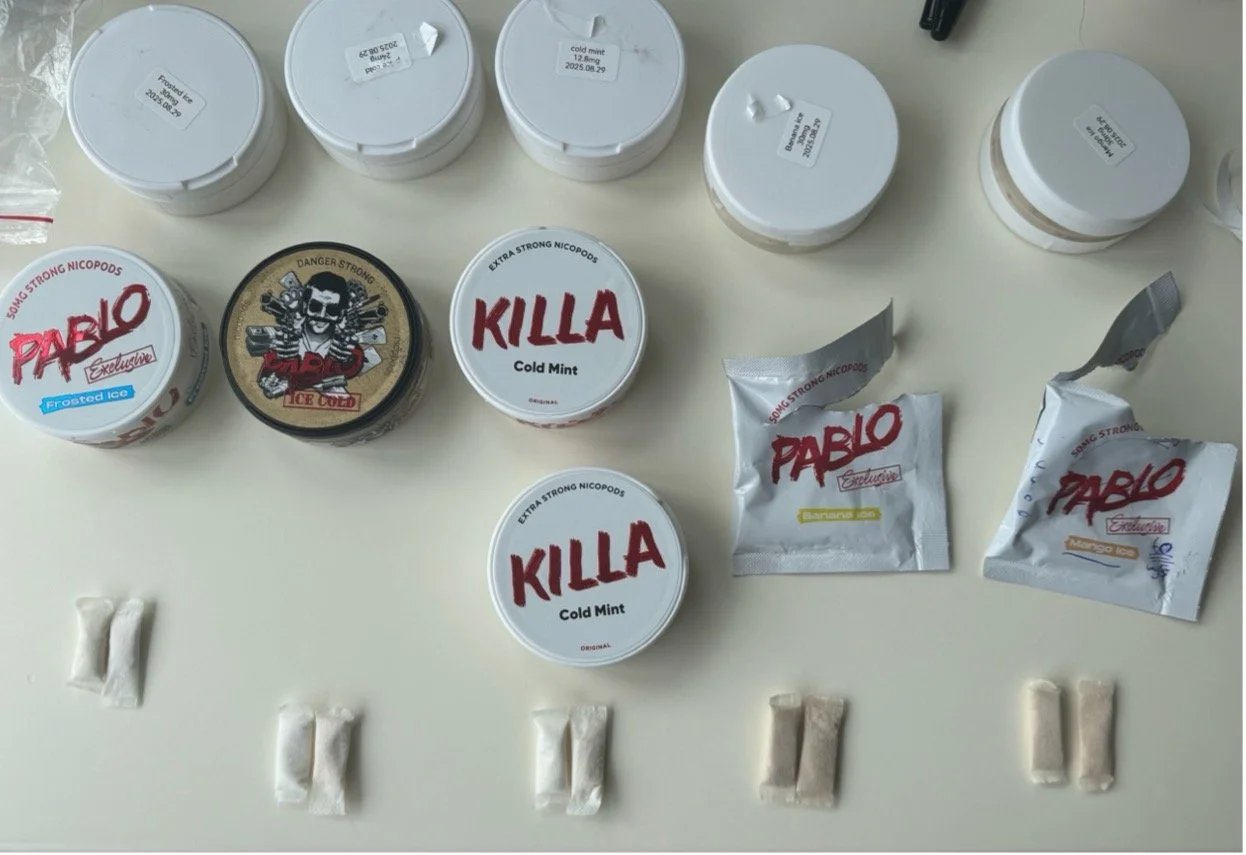
Why we investigated
I’ve met with pouch distributors in the UK, the US, Morocco, Nepal and every Southeast Asian country where BiNGBONG sells. In conversations, the same problem kept coming up: fake nicotine pouches. The fast growing and murkly regulated nicotine pouches industry has attracted swaths of hoodlums that buy fakes on the cheap and sell as real.
The countries closest to China: Thailand, Vietnam, and Laos had a particularly high prevalence of obvious fakes.
However, fakes have begun to disappear for reaons we’ll touch on later.
How convincing are the fakes? And would someone notice without having the original beside them?
Firstly, you will not notice by looking at the label or can. Copying this part is child’s play.
So, we compared five imitation products carrying Pablo and Killa branding against their genuine counterparts: Frosted Ice, Ice Cold, Cold Mint, Banana Ice and Mango Ice.
This was an internal sensory comparison, not a laboratory study. Our scores reflect how closely the samples resembled the originals—not their safety or chemical composition.
What we found
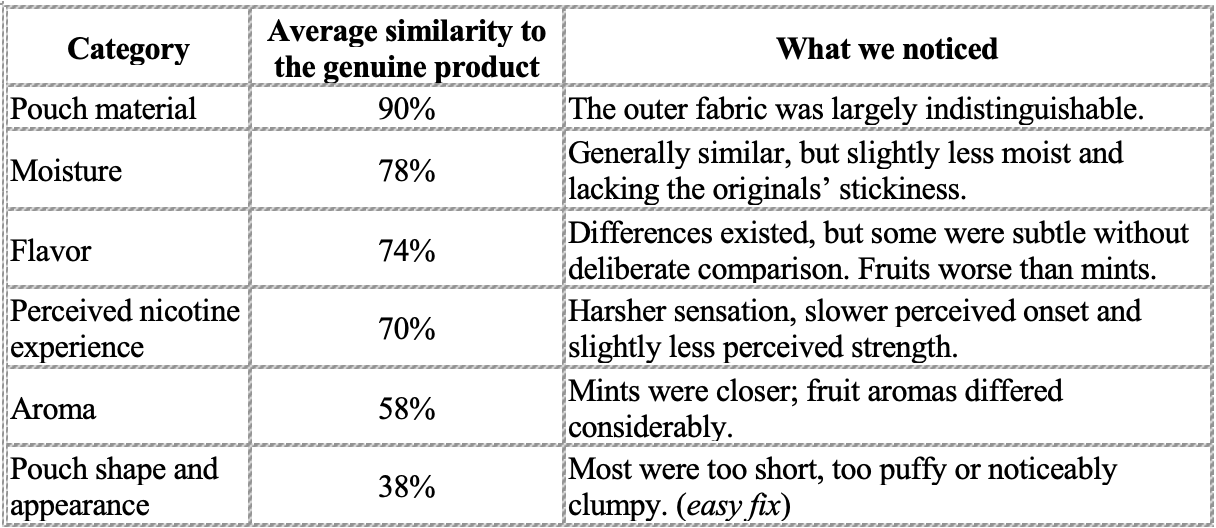
These are subjective similarity scores from the five products compared. A 90% score does not mean a product is “90% genuine.”
The fabric was convincing. The construction gave more away.
The outer pouch material was the closest match across every sample. Judging authenticity by the fabric alone would have been difficult.
Shape and filling told a different story. Most imitation pouches were shorter and puffier than the originals, with clumpier contents.
However, this is very easy to fix.
Flavor alone would be a poor test
Some flavors were closer than we expected – fruits more off than the mints.. Our notes suggest that a casual user, without a genuine product beside them, could miss certain differences.
Smell was more revealing. The mint samples smelled reasonably close, although less minty. The fruit samples were noticeably different and, in our assessment, actually smelled less artificial than the originals.
That deserves an honest mention: a counterfeit won’t necessarily smell or taste worse in every respect. Personal preference cannot establish authenticity.
A harsher sensation doesn’t tell you the nicotine dose
The imitation samples felt noticably harsher, while their perceived nicotine effect was slower and slightly weaker.
We did not measure nicotine concentration, pH or absorption. Those observations therefore cannot establish that the samples contained less nicotine, or explain what caused the difference.
The comparison also did not assess contaminants, ingredient purity or consistency between batches. Those questions require appropriate laboratory testing.
What changed in China in 2026?
China tightened its regulatory position in January 2026. A State Tobacco Monopoly Administration announcement dated January 6 explicitly included nicotine pouches within its smokeless tobacco framework and prohibited production and sales without permission. This was a prohibition on unlicensed activity, rather than a blanket ban on every manufacturer and seller. However, after speaking with internal sources, the three most reputable manufacturers have already shuttered their China manufacturing. www.hengnan.gov.cn
It followed a December 2025 government directive targeting illegal tobacco activity throughout the supply chain, including manufacturing, warehousing, logistics, distribution and online sales. Unauthorized nicotine pouch production and sales were specifically included. www.xjhegs.gov.cn
Our industry contacts have also reported recent enforcement affecting factories, logistics agents and brand operators. We have not independently verified an aggregate arrest or fine count, so we are not publishing one here.
While there has been much progress made, it stands to reason that only the smaller, lower quality factories are left.
What buyers should take away
Our comparison showed that some features of a counterfeit can be convincing while others are visibly different. A familiar fabric or recognizable flavor can provide reassurance without actually verifying the product.
For adults who already use nicotine pouches, the practical steps are straightforward:
Buy through a brand’s confirmed retailers or distributors.
Ask the brand to check questionable products and seller details.
Keep the packaging and batch information if something seems wrong.
Treat differences in shape, filling, smell or feel as reasons to investigate.
Manufacturing location alone does not establish quality or authenticity. Our findings concern these five imitation products sourced from China.
The biggest lesson was how much uncertainty a familiar-tasting pouch can hide. Knowing where it came from matters more than whether it “seems about right.”
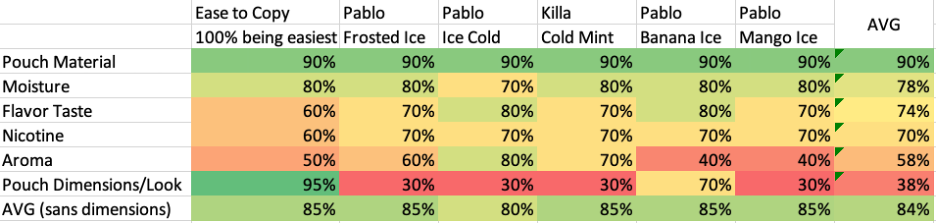
Detailed product comparison.
For adults who already use nicotine. Nicotine is highly addictive; nicotine pouches are not risk-free. Nonusers should not start. Do not use during pregnancy. Keep away from children and pets.